Project Overview
The Long Tom River rises in the Central Oregon Coast Range and flows east to join the Willamette River. In 1941, the U.S. Army Corps of Engineers built a flood control and water supply dam called Fern Ridge in the upper watershed, several miles west of Eugene. The maximum discharge from the reservoir exceeded the capacity of the meandering, low-gradient Long Tom River downstream. To reduce erosion from reservoir discharges, starting in 1943 the Corps straightened the Long Tom River, removed woody debris, built levees, and armored the channel. This work converted a 36-mile reach of the river into a straighter, deeper, and rock-lined stretch of 23 miles. The Corps also built three low-head dams between 7.5 feet and 11.5 feet high in order to slow the river’s velocity and reduce scour. The lowest such structure is at the small town of Monroe.
At 85 feet wide and about 9.5 feet high, the Monroe drop structure completely spans the river. The current dam was built in 1944, but there were two previous dams at the same site. The first dam was built in the late 1800’s and was rebuilt in 1911. The dam was built to divert water through a millrace to operate a flour mill and produce electricity. A fish ladder was installed when the dam was rebuilt in 1911. It is currently in very poor condition and is passable only by adult fish (primarily cutthroat trout) at certain water levels. Fish passage at the Stroda drop structure several miles upstream is impeded, passable only by adult cutthroat trout at a very narrow window of flows. Nearly three miles farther upstream, the Ferguson drop structure is a full barrier for fish passage, but some level of fish passage is provided through a historic channel of the Long Tom River. Removal of the Monroe drop structure will restore passage to over 3.5 miles of main stem river habitat. When passage at the upstream Stroda and Ferguson structures are addressed, juvenile fish will have access to 106 miles of additional main stem and tributary habitat.
The Monroe drop structure completely blocks juvenile upper Willamette spring-run chinook salmon, listed as threatened under the Endangered Species Act, which rear in the Long Tom River after hatching in the McKenzie and Middle Fork Willamette rivers. Juvenile upper Willamette River spring-run chinook salmon have consistently been collected below the Monroe drop structure. The presence of juvenile spring-run in other west-side tributaries (like the Mary’s and Luckiamute Rivers) nearly 30 miles from the Willamette River suggests that given access, these fish would likely rear in Long Tom tributaries far upstream of Monroe like Bear and Ferguson Creek.
The Monroe drop structure also impacts passage of anadromous Pacific lamprey. After the structure was built, local residents reported huge numbers of lamprey (“eels”) and fluvial cutthroat trout stacked against its base. Some lamprey make it over the dam, but the structure slows down their migration significantly and decreases their spawning success. The Long Tom River also harbors native redside shiners, dace, sculpin and stickleback.
Salmon restoration in Oregon’s Willamette River Valley requires a comprehensive, systematic approach. The degradation of functional conditions from a habitat perspective involves 150 years of dam-building (13 large dams and more than 400 small), the straightening and armoring of rivers, clearing of bottomland forest, and draining of wetlands. Both salmon spawning and rearing habitat would need to be restored. The Long Tom River watershed is a priority because of its high-quality fish rearing habitat, and the Monroe drop structure is the lowest barrier to that habitat. Many Watershed Assessments and basin-wide planning documents have called for addressing fish barriers on the Long Tom.
Project Slideshow & Site Photos


Wild fish born in the McKenzie or Middle Fork, work their way down the Willamette toward the ocean. When flows in the big river are high, smaller, slower rivers like the Long Tom provide important habitat during this critical part of their young lives. Learn more...
Wild fish born in the McKenzie or Middle Fork, work their way down the Willamette toward the ocean. When flows in the big river are high, smaller, slower rivers like the Long Tom provide important habitat during this critical part of their young lives. Learn more...
Wild fish born in the McKenzie or Middle Fork, work their way down the Willamette toward the ocean. When flows in the big river are high, smaller, slower rivers like the Long Tom provide important habitat during this critical part of their young lives. Learn more...
Over 100 miles of main stem Long Tom, and tributary habitat are upstream between Monroe and Fern Ridge. That extensive habitat is waiting for these little fish to return, and you can help!
Learn more...
Over 100 miles of main stem Long Tom, and tributary habitat are upstream between Monroe and Fern Ridge. That extensive habitat is waiting for these little fish to return, and you can help!
Learn more...
Over 100 miles of main stem Long Tom, and tributary habitat are upstream between Monroe and Fern Ridge. That extensive habitat is waiting for these little fish to return, and you can help!
Learn more...
This winter, the council did some fish sampling a few hundred feet below the drop structure in Monroe on the Long Tom. The very first dip of the seine caught this wild juvenile Chinook pictured to the left! Learn more...
This winter, the council did some fish sampling a few hundred feet below the drop structure in Monroe on the Long Tom. The very first dip of the seine caught this wild juvenile Chinook pictured to the left! Learn more...
This winter, the council did some fish sampling a few hundred feet below the drop structure in Monroe on the Long Tom. The very first dip of the seine caught this wild juvenile Chinook pictured to the left! Learn more...
Spring Chinook Facts #1
Spring Chinook Fact #3
Spring Chinook Fact #2
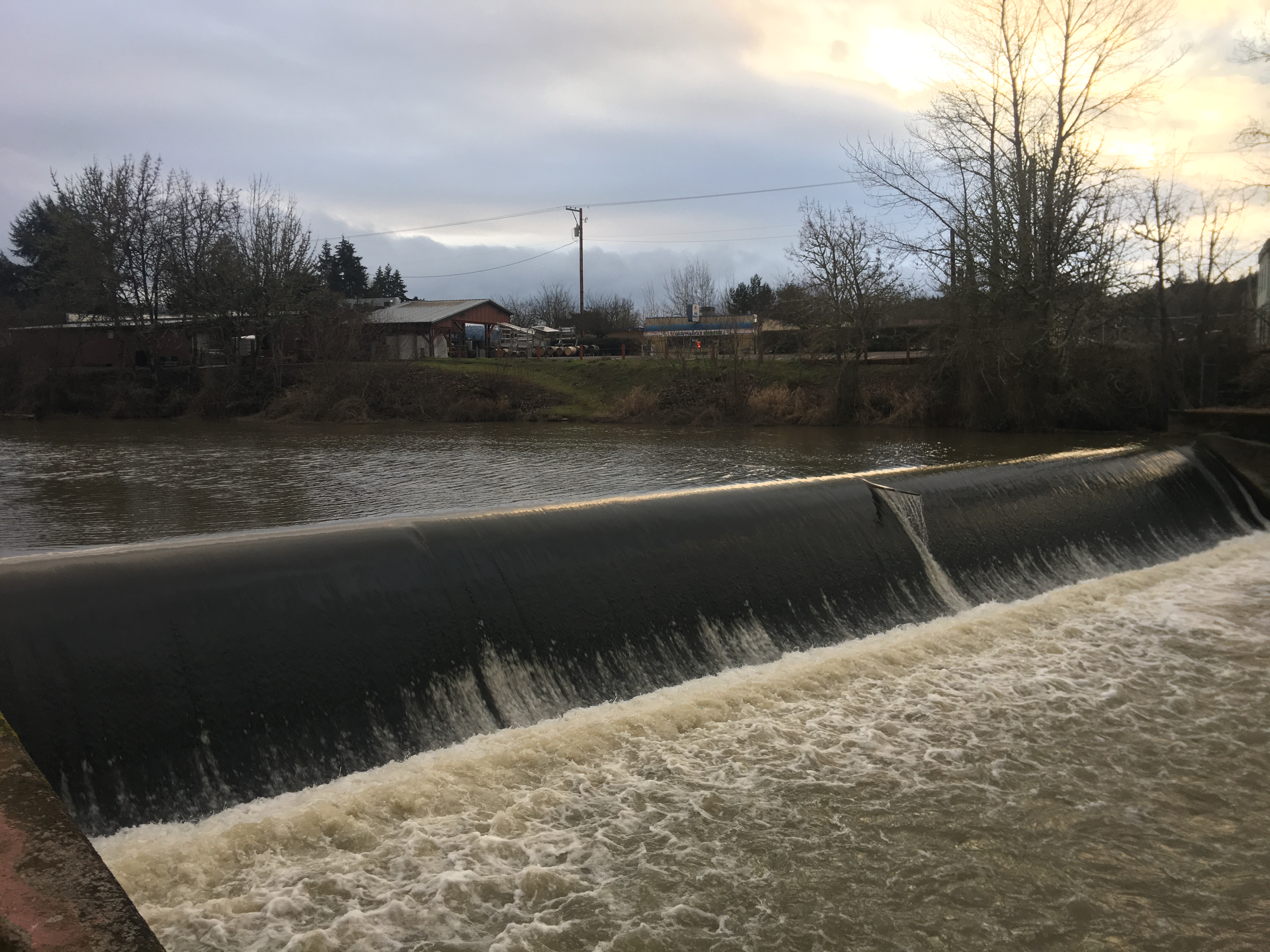
The dam in Monroe is called a "run of river" style dam. Which means it doesn't store any water - every drop that flows in, flows out at the same flow!
The dam in Monroe is called a "run of river" style dam. Which means it doesn't store any water - every drop that flows in, flows out at the same flow!
The dam in Monroe is called a "run of river" style dam. Which means it doesn't store any water - every drop that flows in, flows out at the same flow!
The City of Monroe's drinking water is currently drawn from the pool above the dam. Fish passage alternatives will consider the City of Monroe's drinking water needs & help to secure their drinking water access.
The City of Monroe's drinking water is currently drawn from the pool above the dam. Fish passage alternatives will consider the City of Monroe's drinking water needs & help to secure their drinking water access.
The City of Monroe's drinking water is currently drawn from the pool above the dam. Fish passage alternatives will consider the City of Monroe's drinking water needs & help to secure their drinking water access.
The primary function of the dam is to dissipate the energy of the river and extend the life of the constructed river channel. Current work is underway to determine the effects of different passage solutions on this original purpose.
The primary function of the dam is to dissipate the energy of the river and extend the life of the constructed river channel. Current work is underway to determine the effects of different passage solutions on this original purpose.
The primary function of the dam is to dissipate the energy of the river and extend the life of the constructed river channel. Current work is underway to determine the effects of different passage solutions on this original purpose.
Drop Structure Fact #1
Drop Structure Fact #1
Drop Structure Fact #1
Drop Structure Fact #3
Drop Structure Fact #2


- 60 Riverside Landowners Engaged
- 25+ Public Meetings, Tours & Events
- $2M+ State, Federal, and Foundation Grant Dollars brought to the project
- $3M+ U.S. Army Corps of Engineers Investment into the project
Project Milestones & Progress
In 2015, with a grant from the Oregon Watershed Enhancement Board, the Long Tom Watershed Council investigated fish passage restoration. The Corps also analyzed flood issues on the river with hydrologic modeling to consider alternative ways to modify its system on the Long Tom to allow fish passage while still maintaining its flood control and irrigation storage missions. The Corps secured funding under the Water Resources Development Act 1986 Section 1135, which provides authorization for the Corps to modify existing projects to improve the environment. The Corps, working with the City of Monroe, the Confederated Tribes of Siletz Indians, and LTWC, completed the first phase (feasibility review and environmental assessment) of the 1135 project in 2023. That study analyzed a number of different fish passage options at the site and settled on complete removal as the most cost effective option. We are now in the second phase of the project, design and construction. Construction is slated for 2027.
Community support for fish passage at the Monroe drop structure is broad and includes many local leaders. Alternatives were defined and developed at a conceptual level, and analysis was completed to determine resulting water levels related to the city of Monroe’s water intake, the ODOT bridge footings upstream, water levels in the adjacent park and wetlands during the year, and for people to understand how the river will look and sound under different scenarios and seasons. Many local landowners have a stake in the waterfront. The watershed council used state grant funding for stakeholder engagement from 2022-2024 to increase the knowledge and experience of Monroe citizens with the river. Monroe draws its water supply from the river impounded by the dam, so settling on complete removal was contingent on rebuilding the intake so the city can continue to divert water. LTWC secured state grant funds to completely fund the design and installation of a new intake. The Army Corps is coordinating closely with ODOT to develop a design for the project that will not impact the highway 99 bridge footings.
Estimated Project Timeline
Fish passage at Monroe has been a vision for the council since it’s inception over 21 years ago. Our 21 years of work upstream benefits numerous species of native fish and wildlife, and is an essential foundation for the work now underway in Monroe.
Removal of the Monroe Drop Structure and the construction of the City of Monroe’s new municipal water intake is scheduled for summer, 2027.
Current Phase
The design for the dam removal and associated elements is in development and is being led by the Army Corps, with input and approval from the City of Monroe and LTWC.
The City of Monroe will be hiring an engineering firm to design the new water intake starting in early 2026. Grant funds secured by LTWC will be paying for the design and installation of the new intake.
Project Benefits
- Restore access for juvenile salmon and cutthroat trout to 3.5 miles of main stem habitat.
- Restore access to 106 miles of main stem and tributary habitat once all three drop structures have been removed or modified to allow fish passage.
- Improve access for federally threatened spring-run chinook salmon and two species of lamprey, and improve conditions for cutthroat, Oregon chub, redside shiners, dace, sculpin, stickleback, western pond turtles, and red-legged frogs.
- Eliminate the safety and liability hazard from the low-head dam in the town of Monroe.
- Enhance the aesthetic appeal and recreation potential of the Monroe waterfront business area.
Plans & Reports
The Feasibility Study and Environmental Assessment from the first phase of the 1135 project, led by the Army Corps, can be found here.
How Can I Help?
Visit the page for our current fundraising campaign for this project HERE, and give generously today to help this vision for a better connected lower Long Tom river, become a reality.
FAQ
Q: What is the function and purpose of the dam in Monroe now? Does it store water?
A: The dam in Monroe is considered a “run of river” dam, which mean there is no water storage function for the dam. As water enters the ponded area behind the dam from upstream, it exits over the dam at the same rate and has no effect on flows downstream. The primary function of the dam is to dissipate energy of the river as it falls over the dam. This dissipation was designed to extend the lifespan and reduce maintenance of the channelized and constructed segments of the river downstream. The Army Corps has determined that removal of the dam will not impact the river channel and will not impact the project’s flood control mission. There will be not be any increased flooding once the dam is removed. A secondary function of the dam is to provide predictable pool depth for the City of Monroe’s drinking water intake. LTWC has secured state grant funds to replace the city’s water intake in concert with the dam removal, securing Monroe’s access to drinking water in the Long Tom for the long term. [for more information about the Watershed Council’s work in partnership with the City of Monroe to improve the City’s drinking water: Click here]
Q: Why does the watershed council need my support to address a federally owned structure?
A: This is a watershed wide vision that is bigger than just the dam in Monroe. The Monroe fish passage barrier is the first that migrating fish encounter on their way upstream from the Willamette, and the most complex to find a solution for. The Watershed Council has stewarded this project for the last 10 years, and has leveraged resources for technical review of the project, inundation modeling, community outreach efforts, visioning with Monroe decision makers, and continued dialogue with a steering committee of local stakeholders, and even an opportunity for local school children in Monroe to interact with the native fish below the dam. The Army Corps’ 1135 project requires continued engagement from local partners, including the Watershed Council to help guide the project locally, leverage local resources, and continue to reflect back the priorities of the watershed into the federal process. Once the 1135 project is complete, the Watershed Council and the City of Monroe will continue to be local partners responsible for continuing the stewardship of the project before and after construction. Our ability to stay engaged is essential for a successful project to secure fish passage at Monroe!
Q: When do you expect successful fish passage to be achieved at this site?
A: Removal of the dam and replacement of the city’s water intake is scheduled for summer 2027.
Q: What about the other structures upstream of Monroe? Are they also fish barriers? Are you going to remove Fern Ridge Dam?
A: Upstream of Monroe there are three additional fish passage barriers. Two of those barriers are passable at some high-flow conditions. Improving fish passage at these sites is listed as a high priority in our Lower Long Tom River Habitat Enhancement Plan and potential exists to address fish passage at both structures. The dam in Monroe is the first and highest priority to address for passage as its the first barrier that migrating fish encounter when moving upstream from the Willamette. The Fern Ridge dam is a community resource with multiple values for recreation, irrigation flow management, and flood risk mitigation. While Fern Ridge is a fish barrier at all flows, there is over 100 miles of habitat for native fish available on the Long Tom mainstem and Coast Range tributaries between the Monroe dam, and Fern Ridge dam that is currently inaccessible to migrating fish. Our priority is to reconnect those 100 miles of habitat in the Lower Long Tom (below Fern Ridge Dam), and its tributaries to the main stem of the Willamette River and to restore function of this highly managed and modified section of river. Providing fish passage at Fern Ridge Dam for Pacific lamprey using “lamprey ramps” is a conceptual idea that LTWC is exploring with other partners.